
AI for Marketers: Marketing Analytics and Reporting Without the Spreadsheet Grind
Most marketers drown in dashboards and still struggle to answer the one question that matters: what actually worked? An AI marketing assistant changes that by reading the data, building the report, and telling you what to do next — instead of leaving you to stitch spreadsheets together.

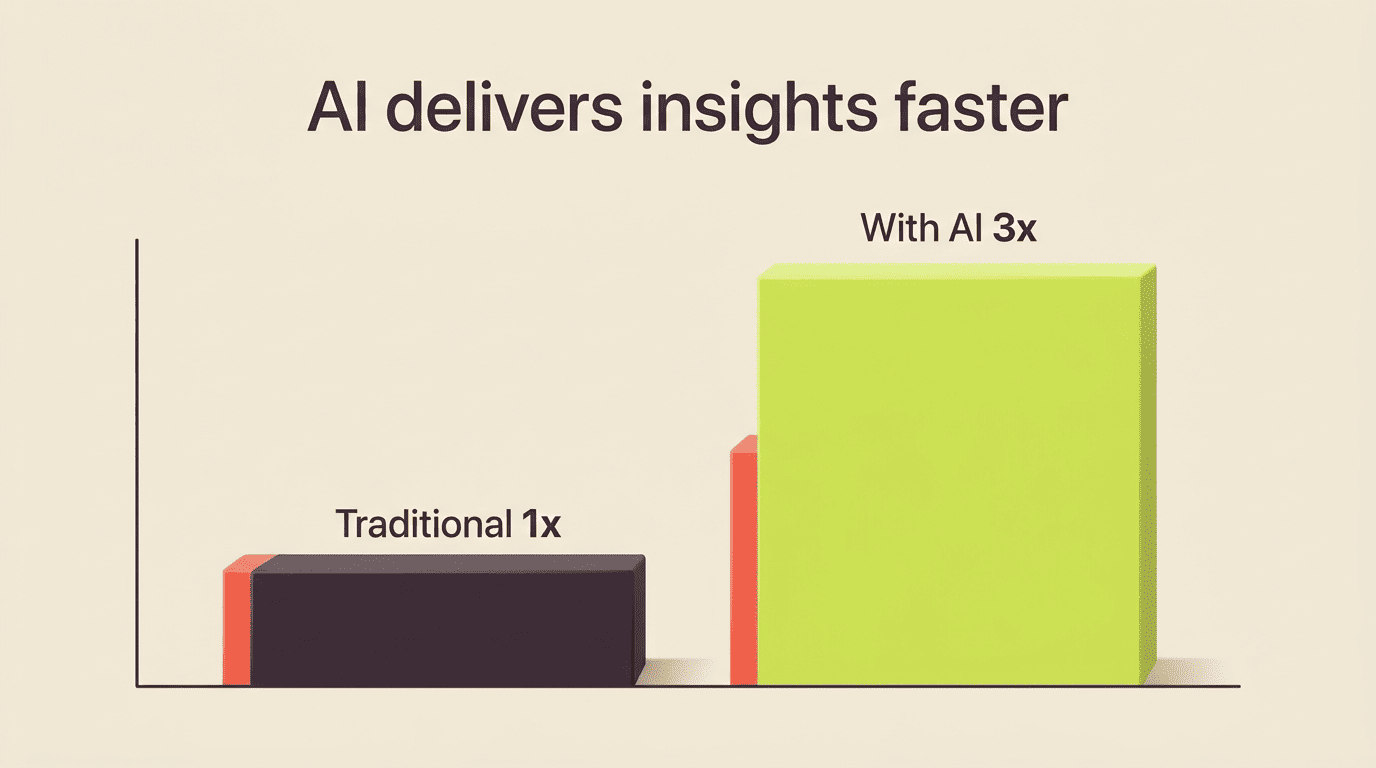
The time pressure is real. Some 56% of marketers say they lack the time to properly analyze their data, and AI closes that gap by turning raw numbers into insight roughly three times faster on unified data. More importantly, it moves analytics toward the predictive rather than the purely reactive — from explaining last month to forecasting the next one.
What AI Marketing Analytics Actually Does
AI marketing analytics uses machine learning, natural language processing, and predictive models to analyze marketing data, optimize campaigns, and anticipate customer behavior. The shift it drives is best understood as four quiet reversals in how a marketing team works.
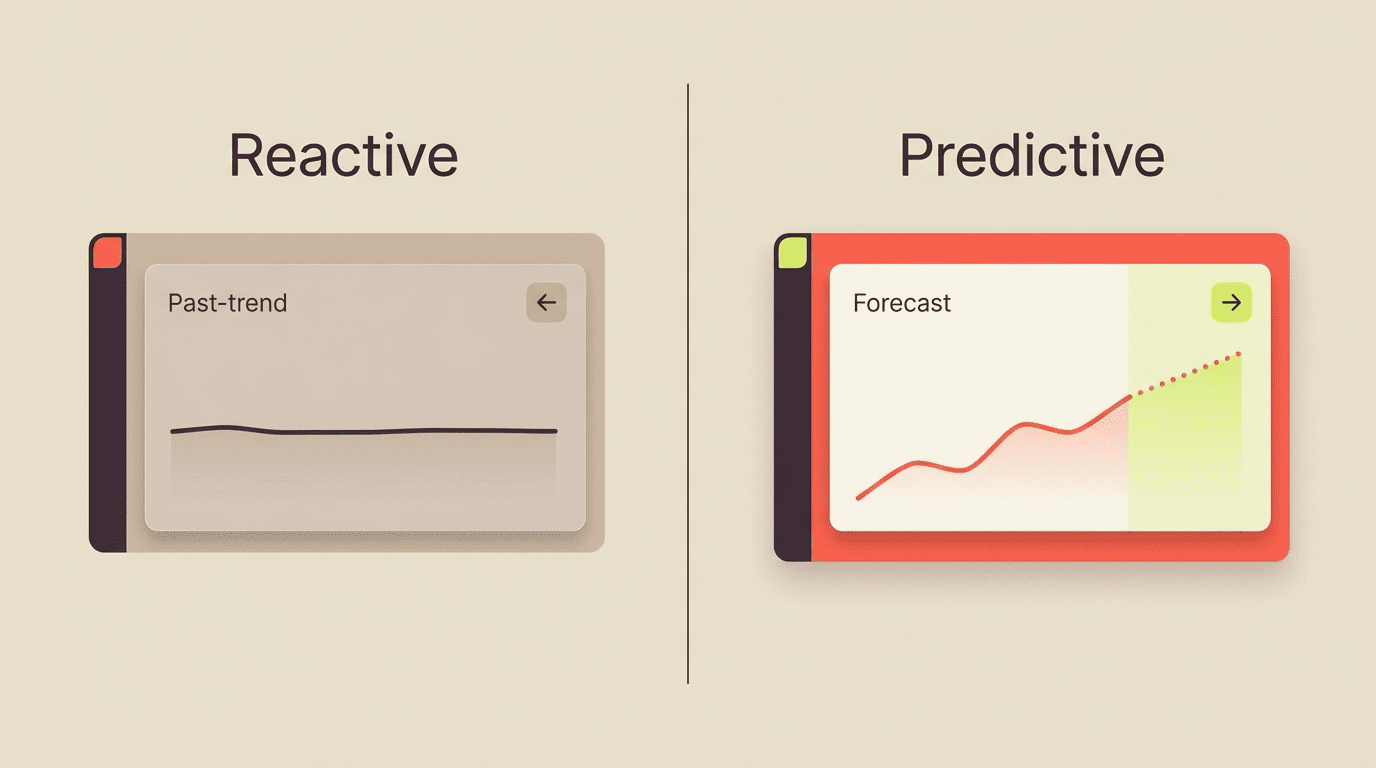
Those four shifts are: reactive to predictive, manual to automated, siloed to unified, and technical to accessible. The last one matters most — natural-language interfaces let a non-technical marketer pull an insight that used to require a data analyst and a ticket queue.
From reactive dashboards to predictive answers
Traditional analytics tells you what happened; AI-powered analytics tells you what is likely to happen and what to do about it. By consolidating fragmented sources into one clean dataset, teams generate insights about three times faster and reallocate up to 30% of their time from data wrangling to strategy.
That speed compounds. When the reporting layer runs itself, the team’s attention moves to decisions, and the analytics function stops being a monthly autopsy and becomes a live steering wheel.
The core capabilities
Under the hood, AI marketing analytics bundles a set of distinct capabilities that used to live in separate tools:
- Automated data integration — pulling and cleaning data from ad platforms, CRM, and web analytics.
- Predictive forecasting — projecting sales, traffic, and leads before the quarter starts.
- Real-time anomaly detection — flagging a metric that breaks pattern the moment it happens.
- Natural-language querying — answering plain-English questions about the data.
- Machine-learning segmentation — grouping audiences by behavior, not guesswork.
In God we trust. All others must bring data.
W. Edwards Deming
Predictive Analytics: Seeing the Next Quarter
The highest-value use of AI in analytics is looking forward, not back. Predictive analytics projects future outcomes — sales, traffic, conversions — from historical patterns, so budgets get set on evidence rather than instinct.
The payoff is documented. Forrester research has found that organizations using predictive analytics achieve markedly higher revenue growth than peers who rely on historical reporting alone, and by 2026 a large majority of top-performing B2B teams are expected to run AI predictive analytics as standard practice.
Forecasting instead of hindsight
A forecast is only useful if the team acts on it, and that is where AI helps twice: it produces the projection and it flags the lever to pull. Marketing with AI means a media plan can be pressure-tested against predicted demand before a dollar is committed.
The same models power scenario planning. Instead of one static forecast, a marketer can ask how results shift if budget moves from one channel to another, and get an answer in seconds rather than a week.
Predictive lead scoring
Predictive lead scoring ranks prospects by their modeled probability of converting, so sales works the hottest accounts first. It replaces the crude «MQL by form fill» logic with a signal built from real behavior.
The efficiency gain is significant. Forrester’s widely cited benchmark found that companies excelling at lead nurturing generate roughly 50% more sales-ready leads at about 33% lower cost per lead, and AI-driven scoring is what now makes that level of nurturing scalable — doing more and spending less at once.
AI Attribution: Crediting What Really Converts
Attribution is the question of which touchpoint earned the sale, and last-click answers it badly. AI-driven marketing attribution evaluates patterns, timing, frequency, and context to assign credit dynamically, adjusting as customer behavior shifts.
It comes in several flavors, and knowing them helps you choose a tool. The table below sums up the main model types.
| Attribution model | What it does | Best for |
|---|---|---|
| Algorithmic | Data-driven credit, adapts to behavior | Multi-channel accounts |
| Predictive | Forecasts future conversion likelihood | Forward budget planning |
| Probabilistic | Estimates likelihood, not exact credit | Privacy-limited data |
| Unified measurement | Combines attribution with media mix modeling | Large, blended budgets |
Beyond last-click
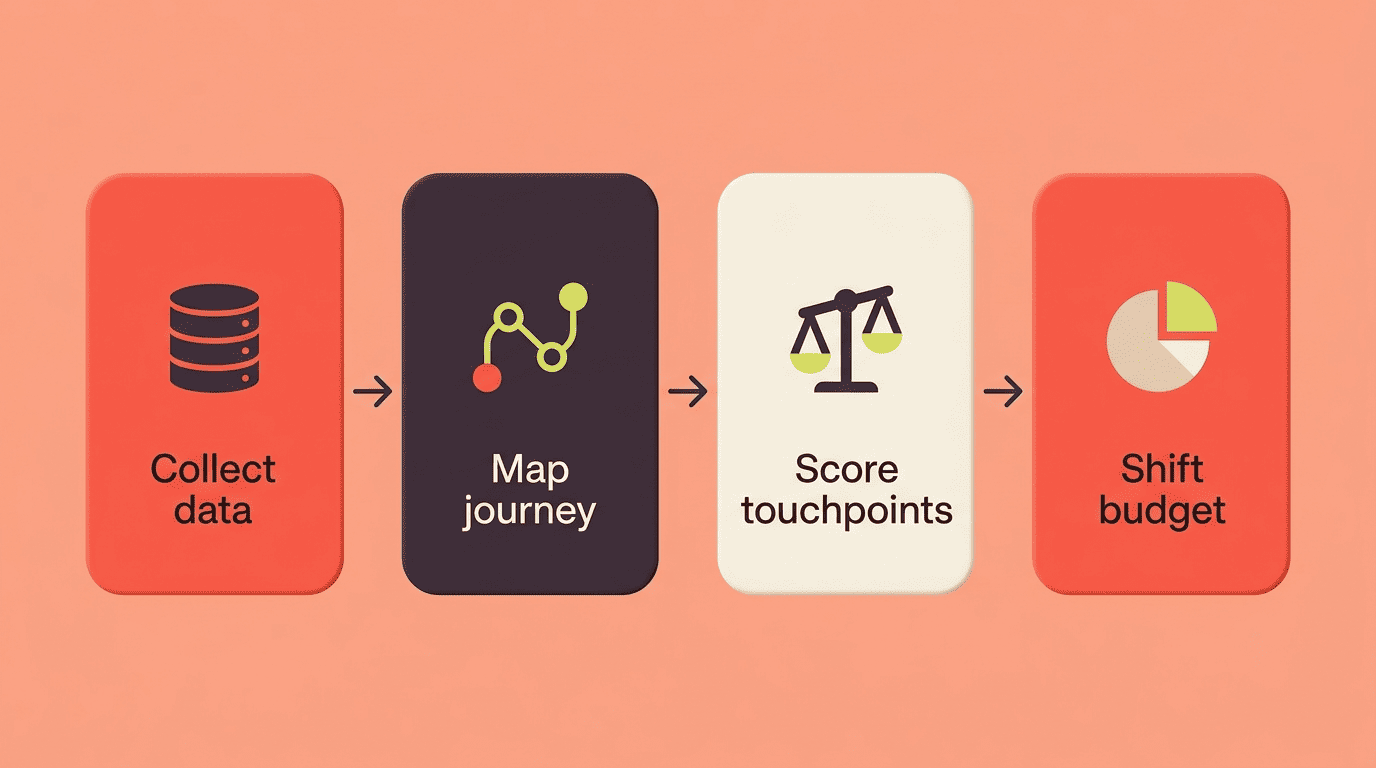
Rule-based models hand all the credit to the first or last click and ignore everything between. Algorithmic attribution instead reads the whole customer journey and distributes credit where the data says influence actually occurred — often surfacing an overlooked mid-funnel touchpoint that was quietly doing the work.
Because the model updates continuously, it keeps pace with reality. When a channel’s real influence rises or fades, the attribution shifts with it rather than staying frozen in a formula set months ago.
What it unlocks (and its limits)
Done well, AI attribution delivers accurate cross-channel ROI and real-time budget reallocation toward what converts. It is one of the clearest ways AI tools for marketers turn measurement into money.
The limits are real, though. Attribution models depend on clean, unified data, they can be a black box that is hard to explain to stakeholders, and they must respect privacy rules such as GDPR and CCPA. Overfitting to historical patterns is a genuine risk when the market shifts.
Automated Reporting and Conversational Analytics
If predictive analytics is the glamorous part, automated reporting is the part that gives marketers their evenings back. AI pulls from every connected source and assembles the report without manual input, eliminating the weekly spreadsheet ritual entirely.
The result is prescriptive, not just descriptive. Rather than handing you a chart and leaving interpretation to you, modern AI reporting explains what the numbers mean and recommends the next move.
Reports that build themselves
A self-building report reads from ad platforms, CRM, and web analytics on a schedule, normalizes the data, and surfaces the story — including the anomalies you would have missed. Platforms now ship with thousands of native integrations so the data arrives without engineering work.
That automation frees the team to act. Time that went into building slides goes into deciding what the slides imply, which is the only part a machine cannot do for you.
Just ask your data
Conversational analytics is the breakthrough that makes all of this accessible. You type a question in plain English — «which campaign drove the most pipeline last quarter?» — and get an answer, no SQL required. Open standards like the Model Context Protocol now let assistants such as Claude and ChatGPT connect securely to marketing data and answer natively.
This removes the last barrier between a marketer and their numbers. When anyone on the team can self-serve an insight, the bottleneck of «ask the analyst» disappears and decisions speed up across the board.
Best AI Marketing Analytics Tools
There is no single winner — the right AI marketing analytics tool depends on what part of the stack you need to fix. Most teams end up combining a data-integration layer, the native AI inside their core platforms, and a specialist for attribution or dashboards.
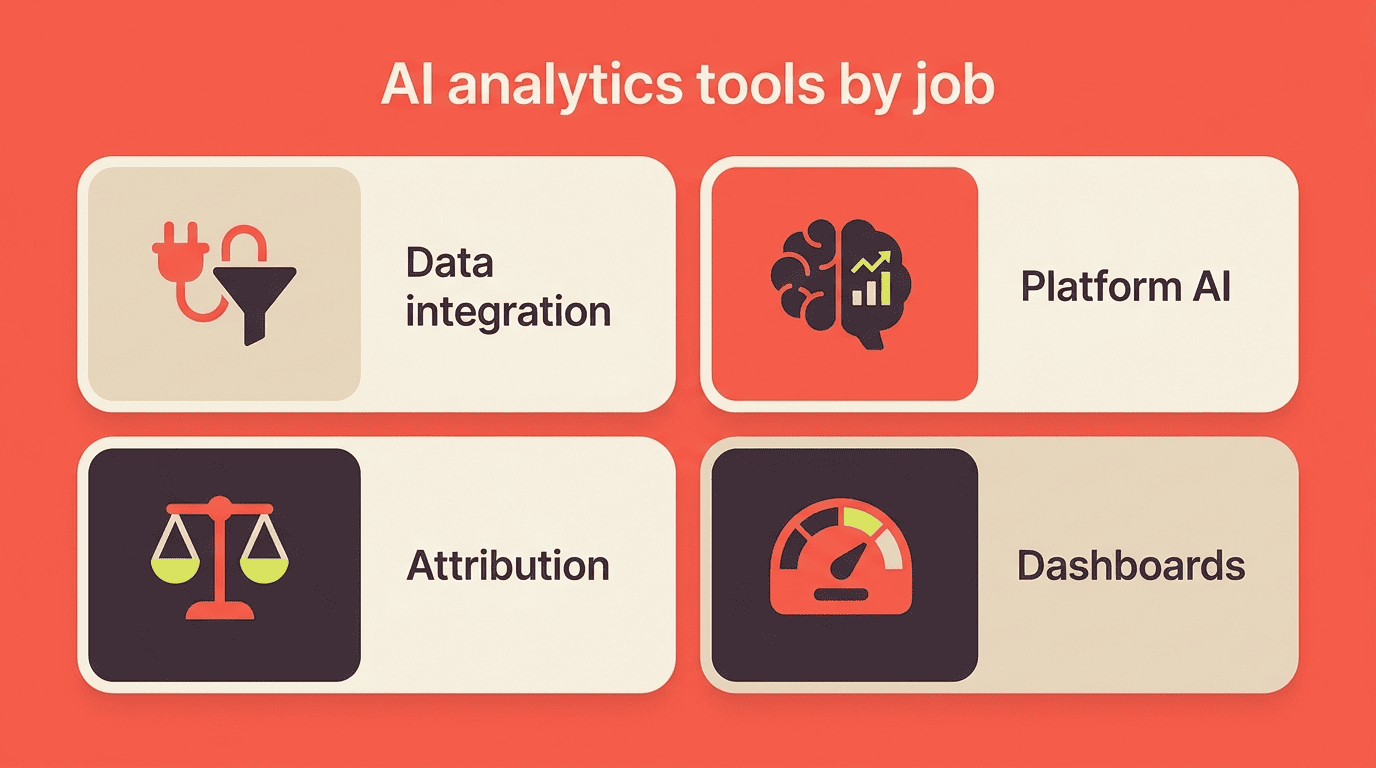
The market sorts into a few clear buckets. For data integration, marketers use Supermetrics and similar unified-data platforms. For native platform intelligence, Google Analytics 4, HubSpot AI, Adobe Sensei, and Salesforce Einstein cover most needs. For attribution, specialists like Triple Whale and Dreamdata lead, while Looker and other dashboard tools handle visualization.
| Job to be done | Category | Representative tools |
|---|---|---|
| Unify data sources | Data integration | Supermetrics |
| Native platform AI | Analytics suites | Google Analytics 4, HubSpot, Adobe Sensei |
| Cross-channel attribution | Attribution | Triple Whale, Dreamdata |
| Dashboards and visuals | Reporting | Looker |
Start with the layer that hurts most. If data lives in ten disconnected tools, fix integration first; if the data is unified but insight is slow, turn on the AI already built into your platform.
The Data-Quality Catch (and How to Start)
Every impressive AI analytics result rests on one unglamorous foundation: clean data. Feed the model fragmented or mistracked data and it will confidently produce the wrong answer, which is worse than no answer at all.
A sensible rollout follows a clear order rather than switching everything on at once:
- Define the business question you want answered before choosing any tool.
- Consolidate your marketing sources into one unified warehouse.
- Turn on the AI already built into your core platform and chase quick wins.
- Enforce data governance and GDPR/CCPA compliance from day one.
- Validate every AI recommendation with before-and-after testing before you scale it.
Favor tools that can explain their reasoning over pure black boxes, keep a human reviewing the automated calls, and treat data quality as the ongoing job it is. Get that right and AI reporting stops being a novelty and becomes the most reliable analyst on the team.
FAQ
Related guides: personalization at scale and AI marketing workflows.