
AI for Marketers: Chatbots and Customer Engagement
For a marketer, an AI chatbot is the fastest way to turn a passive website visitor into an active conversation — and, increasingly, a customer. As part of learning AI for marketers, understanding chatbots means knowing which conversations to automate, which to escalate to a person, and how to measure the engagement they create.
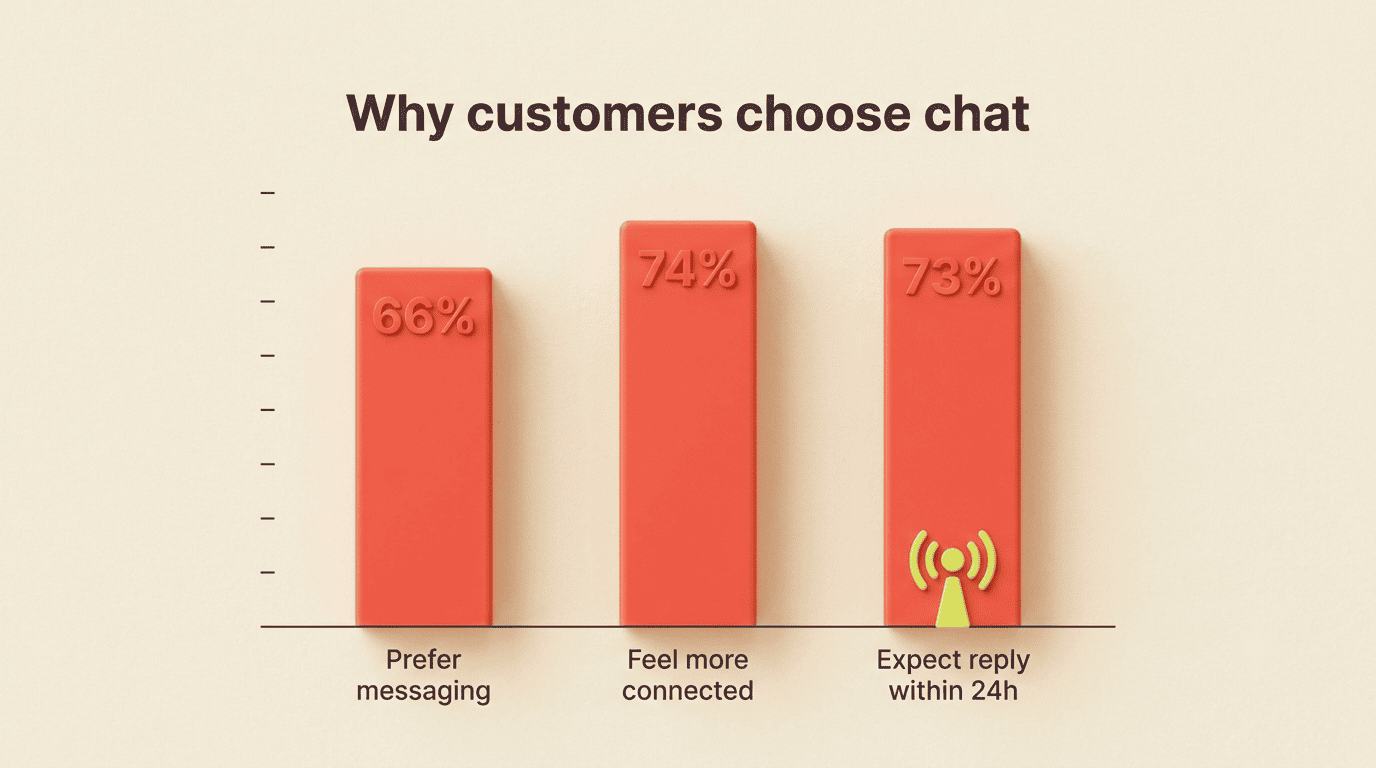
The behavior shift behind this is real: 66% of consumers say messaging is their preferred way of communicating with a business, and 74% feel more connected to a business they can message directly. Chatbots meet customers in that channel, around the clock.
What Chatbot Marketing Actually Means
Chatbot marketing is the use of automated messaging to engage customers across the whole funnel, not just after a purchase. A marketing chatbot can greet a first-time visitor, qualify a lead, recommend a product, answer a promo question, or book a demo — the same messaging bot handles several jobs a human rep used to split across teams.
From auto-reply to conversation
The old idea of a chatbot was a scripted auto-reply bolted onto a support widget. Today’s customer engagement bot sits earlier in the journey: welcoming a visitor, qualifying interest, and routing them before support ever gets involved. Consumers respond to that shift — 74% say they feel more connected to a business they can message directly than to one they can only call.
Why engagement is the real metric
The point of a conversational AI bot isn’t deflecting support tickets; it’s starting relationships at scale. Sprout Social research found that nearly three-quarters of social users expect a brand to reply within 24 hours — and 73% say they’d switch to a competitor if a brand doesn’t respond at all. A bot closes that gap instantly, which is exactly why engagement, not ticket volume, is the metric marketers should track first.
- Welcoming and segmenting new visitors
- Qualifying leads with follow-up questions
- Recommending products based on browsing behavior
- Answering promo and pricing questions in real time
- Booking demos, calls, or appointments
Chatbot vs. Conversational AI vs. AI Agent
These three terms get used interchangeably, but they describe different levels of capability, and mixing them up leads marketers to buy the wrong tool for the job.
Rule-based bots
A rule-based chatbot follows a scripted decision tree or keyword matching — press 1 for sales, type «pricing» for a price list. It’s cheap to build and predictable, but it breaks the moment a customer phrases a question in a way the script didn’t anticipate.
Conversational AI (NLP + generative)
Conversational AI is meaningfully more advanced than a rule-based chatbot because it uses natural language processing to understand intent and context rather than matching keywords. That underlying shift — from scripted flows to generative, context-aware models — is the same technology OpenAI’s ChatGPT is built on, and adoption of it has scaled fast: ChatGPT’s own weekly active users roughly doubled, from about 400 million in February 2025 to 800 million by October 2025, according to OpenAI. Marketing bots now run on the same class of model.
AI agents
An AI agent is the next step up: instead of only answering, it takes actions — booking a slot, completing a purchase, updating a CRM record. This is the shift analysts describe as agentic commerce, where the bot doesn’t just chat, it closes the loop.
| Type | How it works | Best for |
|---|---|---|
| Rule-based bot | Scripted decision tree, keyword matching | Simple FAQs, narrow flows |
| Conversational AI | NLP + LLM understands intent and context | Open-ended support, product Q&A |
| AI agent | Understands intent and executes actions | Booking, checkout, CRM updates |
High-Impact Use Cases for Customer Engagement
The three use cases below cover most of what a marketing bot is asked to do — capture a lead, answer instantly, or personalize a recommendation — and each one only works if the bot is upfront about being a bot.
The FTC Act’s prohibition on deceptive or unfair conduct can apply if you make, sell, or use a tool that is effectively designed to deceive – even if that’s not its intended or sole purpose.
Michael Atleson, U.S. Federal Trade Commission
That warning from the FTC is worth keeping in mind while reading the use cases below — every one of them works better, and stays compliant, when the bot discloses that it’s a bot.
Lead generation and qualification. Interactive quizzes and short forms inside a chat window capture contact details and qualify leads with context-aware follow-up questions, then route the highest-intent visitors straight to a sales rep instead of a generic inbox.
24/7 support and instant answers. Bank of America’s Erica is the clearest large-scale proof point: the assistant surpassed 2 billion client interactions since launch, serving more than 42 million clients by April 2024, with over 98% of clients getting the answer they need directly from Erica. That’s the bar instant-response chatbots now get measured against.
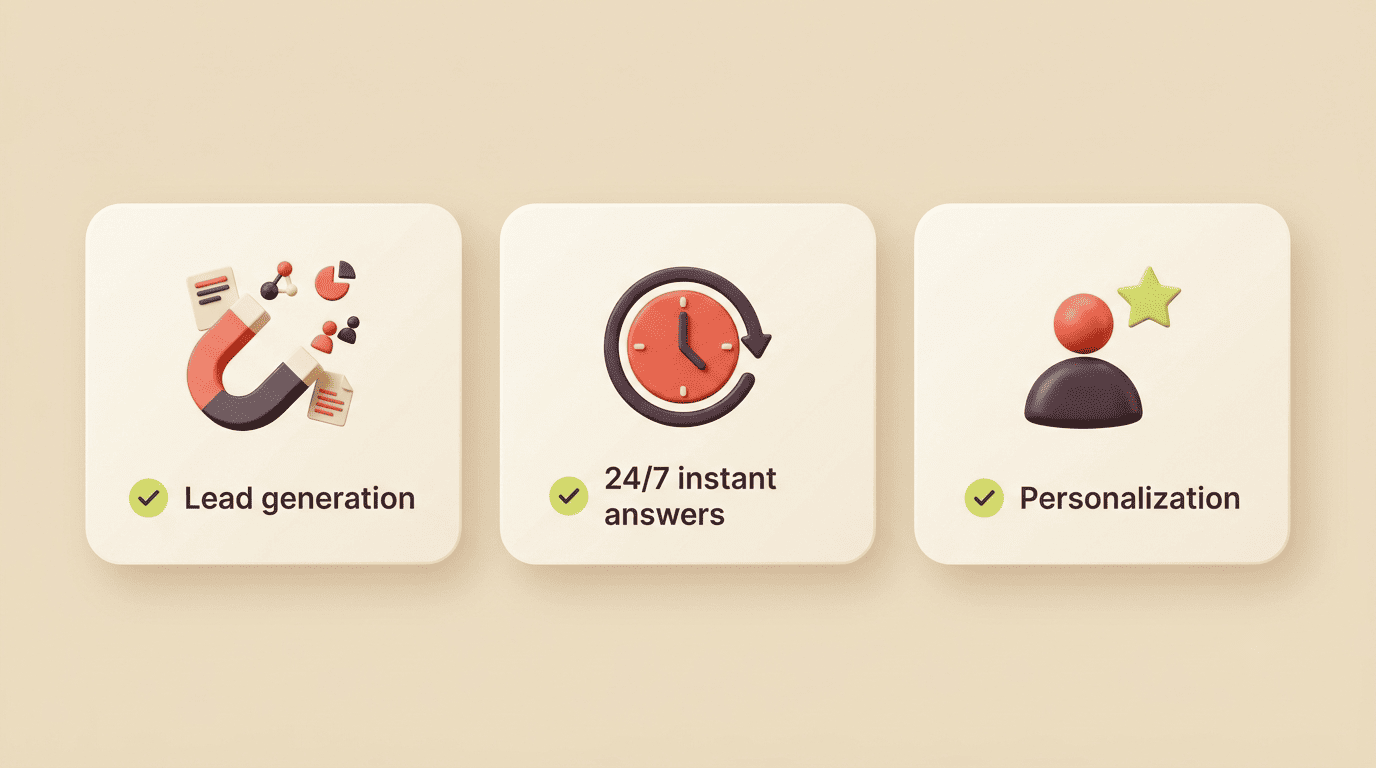
Personalization and product discovery. A well-built AI shopping assistant greets returning visitors by name and recommends items based on past behavior — the model Sephora’s Virtual Artist and Domino’s «Dom» ordering bot both popularized. Traffic referred by AI agents converted at roughly 8x the rate of traffic from social platforms during Cyber Week 2025, and AI and agents are estimated to have influenced 20% of all purchases that week.
How to Build a Chatbot Marketing Strategy
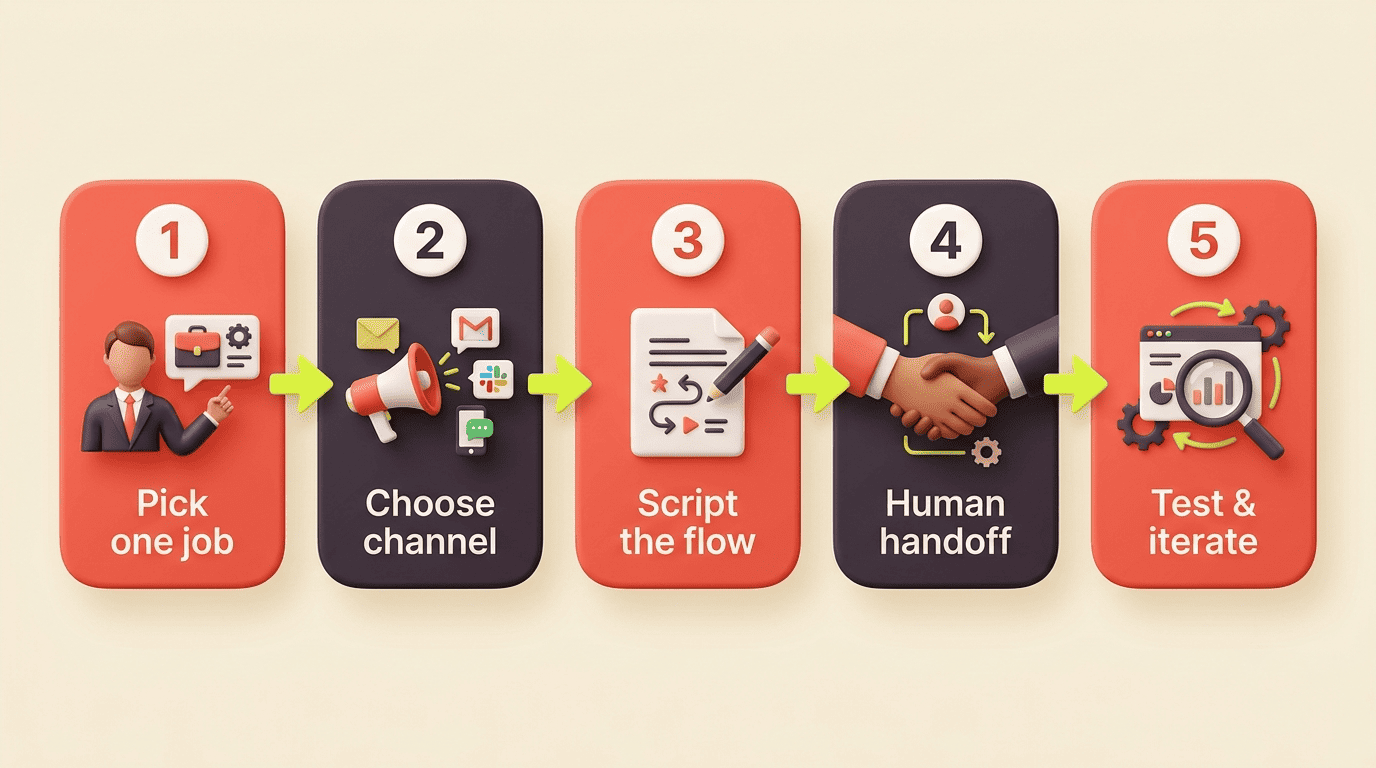
A chatbot marketing strategy fails most often not because the AI is bad, but because nobody defined what the bot is supposed to accomplish before it launched. Following a fixed sequence avoids that.
- Pick one funnel job per bot. Capture, qualify, or support — not all three at once.
- Choose the channel your audience already uses, whether that’s your website, Messenger, WhatsApp, or Instagram.
- Script a welcome flow, a short FAQ tree, and a clear escalation trigger before writing anything else.
- Build in a human handoff from day one. Consumers accept AI assistance mainly when they know they can still reach a person if the bot gets stuck.
- A/B test the opening message, review real transcripts weekly, and iterate — a chatbot script is never really finished.
Keep human takeover under 20% of conversations as a working benchmark; above that, the bot is either mis-scoped or answering questions it was never trained to handle.
Best AI Chatbot Tools for Marketers in 2026
Tool choice should follow the channel and job from the strategy step above, not the other way around.
Match the tool to the job
- Social DMs (Instagram, Messenger) → Manychat, free for up to 25 active contacts, Essential plan from $14/month
- Website conversion, anonymous traffic → Drift or Warmly
- Landing page conversion flows → Tars, 950+ templates, free for up to 50 chats/month
- Omnichannel (WhatsApp, SMS, web) → Gupshup
- Fully custom, brand-specific bot → ChatGPT API
| Tool | Best for | Price anchor |
|---|---|---|
| Manychat | Social DMs (Instagram, Messenger) | Free up to 25 active contacts; Essential from $14/mo |
| Drift | Website conversion, sales handoff | Custom / demo pricing |
| Tars | Landing page conversion flows | Free up to 50 chats/mo; 950+ templates |
| Warmly | Website visitor identification + chat | Free up to 500 visitors/mo |
| Gupshup | Omnichannel (WhatsApp, SMS, web) | Usage-based pricing |
| ChatGPT API | Custom, brand-specific bots | Pay-per-use API pricing |
Metrics, Risks, and Where Humans Still Win
A chatbot program is only as good as the numbers a marketer actually tracks against it — and those numbers need to tie back to pipeline, not just chat volume.
The numbers to watch
None of these benchmarks mean much in isolation — the useful question is whether bot-driven conversations are converting into qualified pipeline, not just racking up open rates. As a working starting point, most marketing chatbots should land in this range:
- Engagement rate: 25–40%
- Conversion rate: 2–5%
- CSAT: 4.0+ out of 5
- Human takeover: under 20% of conversations
Risks and the human line
Chatbots carry real risk if deployed carelessly:
- Hallucinated answers on pricing, policy, or product specs
- Brand-safety incidents from an undisclosed or off-tone bot
- Privacy exposure when a bot collects more data than it needs
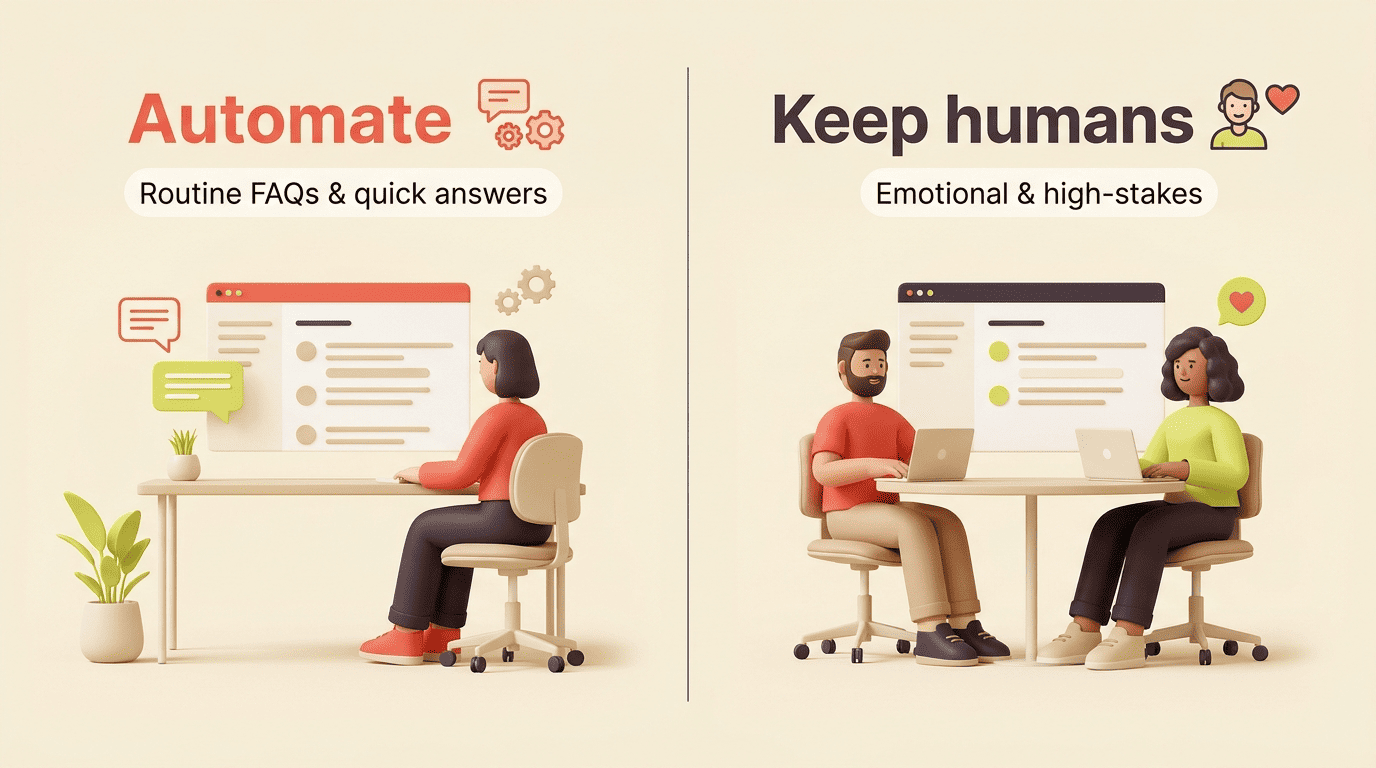
Roughly half of consumers say they’re worried about undisclosed AI content, which is exactly the deception the FTC statement above is aimed at. At the same time, most consumers still say empathy matters more than speed — automate the routine questions, and keep a person on anything emotional or high-stakes.
FAQ
Related guides: AI-powered SEO and prompt engineering for marketers.