
AI for Marketers: Paid Ads and Campaign Optimization That Cut CAC
Paid media is where AI moved fastest from novelty to necessity. An AI marketing assistant now runs the parts of a campaign that used to eat a media buyer’s week — bidding, budget shifts, audience targeting, and creative — and it adjusts them in real time, auction by auction.
The results are concrete. Teams using AI ad optimization commonly cut customer acquisition cost by 20-40%, and campaigns running dynamic creative optimization can lift click-through rates several times over versus static creative. Yet only 39% of agencies have integrated AI deeply into their workflows, which means the competitive edge is still wide open.

What AI Actually Does Inside an Ad Campaign
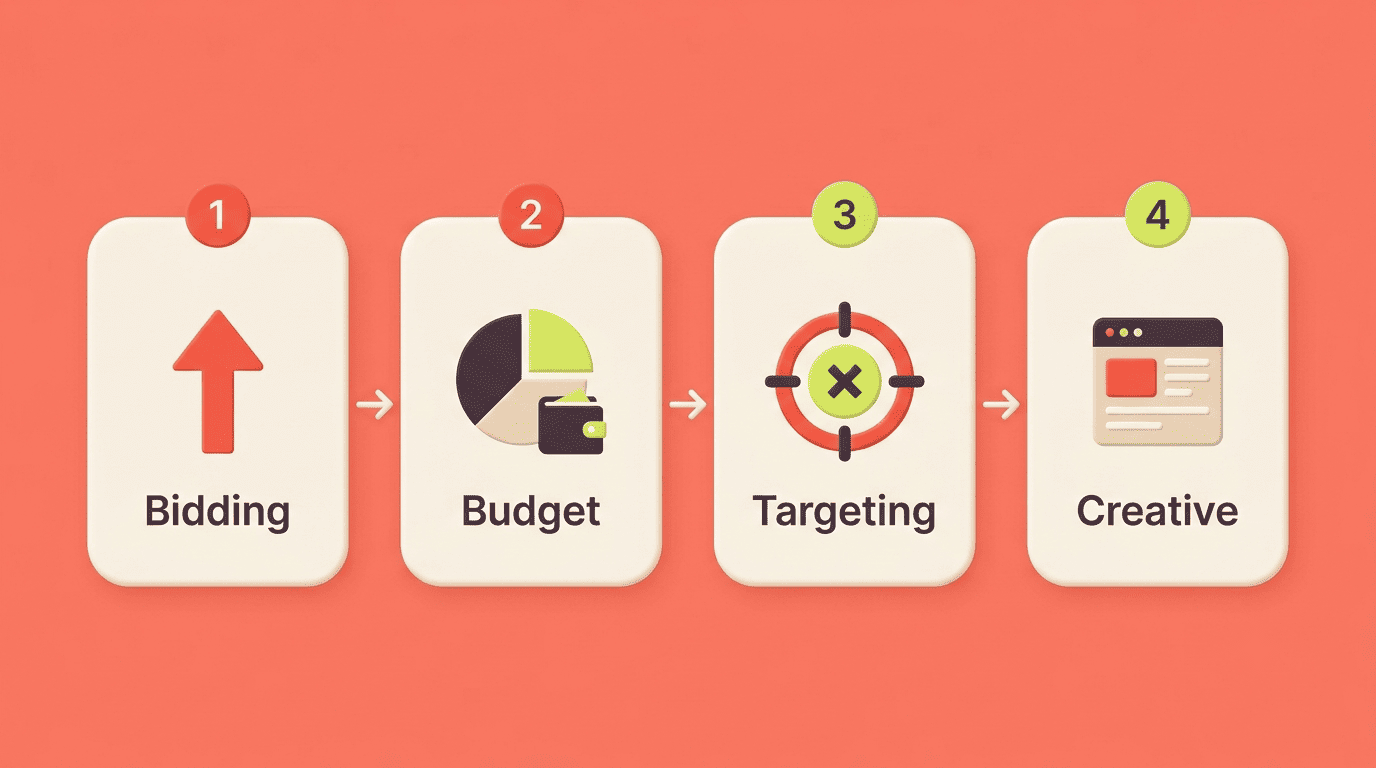
Strip away the hype and AI ad optimization comes down to four levers: bids, budget, targeting, and creative. Machine learning models watch performance across every campaign and act on it faster than any human could, shifting money toward what converts and away from what doesn’t.
The most accessible version already lives inside the ad platforms. Google’s Performance Max and Meta’s Advantage+ are native campaign types that hand bidding, placement, and budget pacing to AI, then optimize toward the goal you set. Third-party tools layer on top of them for finer control.
Real-time bidding and budget allocation
AI adjusts bids per auction based on the predicted conversion likelihood of each individual impression, adapting instantly to competitive pressure. On the budget side, it reallocates spend intra-day toward the campaigns and audiences that are performing, rather than waiting for a weekly manual review.
This is where the cost savings originate. Because the model reallocates continuously instead of once a week, wasted spend shrinks and customer acquisition cost drops by that headline 20-40%. The marketer’s job shifts from pulling levers to setting the strategy the levers serve.
Predictive targeting and micro-segments
Beyond basic demographics, machine learning scores hundreds of behavioral and intent signals to predict who will convert, what they are worth, and which message will land. It surfaces micro-segments a human would never spot in a dashboard.
The upside can be dramatic. In one documented case, an AI-discovered audience segment converted three times better than the broad demographic the advertiser had been targeting. Finding one such segment can reset the economics of an entire account.
Half the money I spend on advertising is wasted; the trouble is I don’t know which half.
John Wanamaker
Creative at Machine Speed: DCO and Generation
The old bottleneck in paid media was making enough creative to test properly. AI removed it. Marketing with AI now means generating dozens of variants and letting the system match each one to the audience most likely to respond.
That machine-matching has a name: dynamic creative optimization. Instead of running a single A/B test, DCO assembles and serves the best combination of headline, image, and call to action per segment, learning as it goes.
Dynamic creative optimization
The performance lift is measurable. Industry benchmarks put dynamic creative optimization at roughly 2-5x higher click-through rates than static creative, alongside 20-50% lower cost per acquisition. One study from researchers at Columbia and Harvard, analyzing over 300,000 display ads and 500 million impressions, even found AI-generated ads reached a 0.76% CTR versus 0.65% for human-made ads.
That does not mean the machine wins alone. The 0.76% figure is an average across volume; a skilled marketer feeding the model sharp briefs and brand rules routinely beats it. That advantage comes down to prompt engineering for marketers — the briefs and brand rules you hand the creative model. DCO is a force multiplier for good creative direction, not a replacement for it.
Generating variations at scale
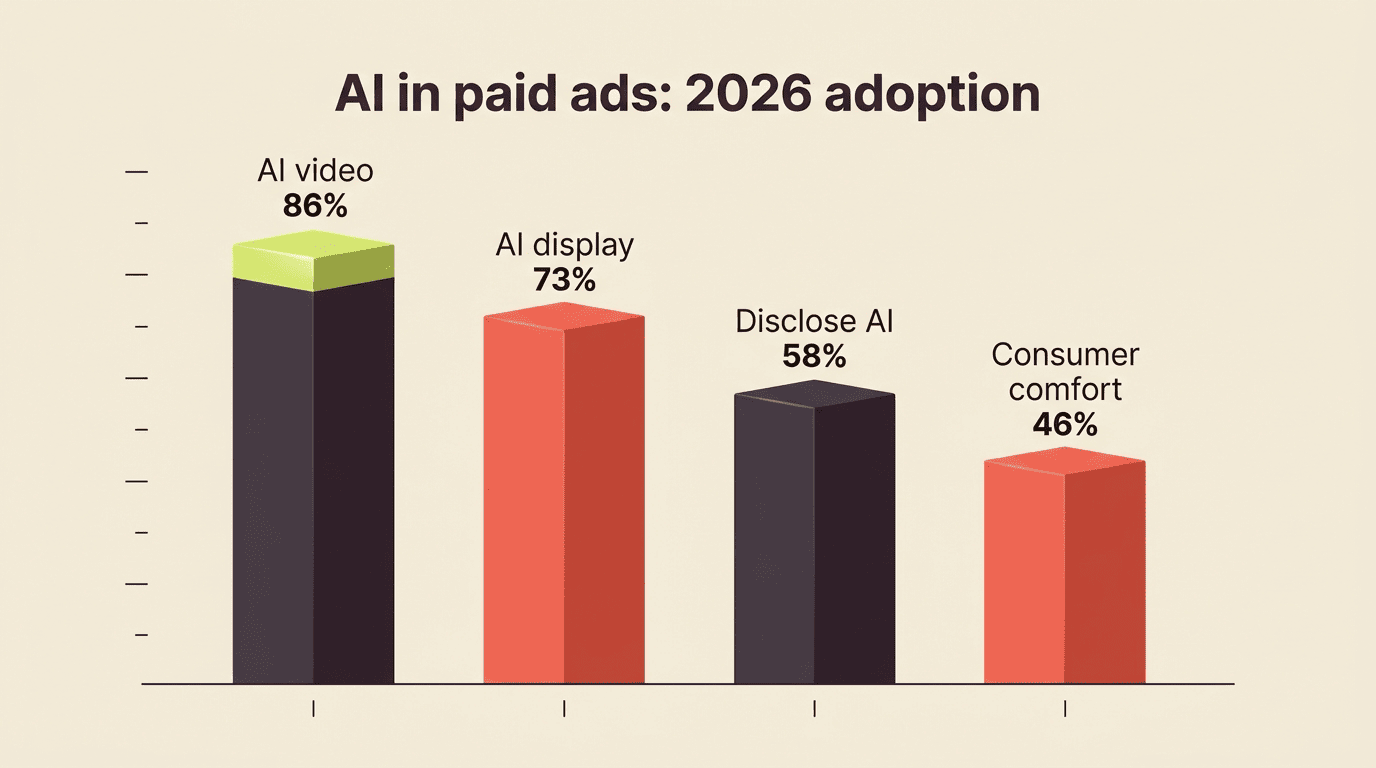
Production speed is the other half of the story. AI landing pages can be built in about five minutes, and an AI-assisted video ad in two to three hours — work that traditionally took two to three weeks. Adoption reflects it: 86% of media buyers plan to use AI for video ad creation in 2026, and 73% of US advertisers already use AI to create display banner images.
The table below maps common creative jobs to the AI tools marketers reach for.
| Creative job | AI tool type | Examples |
|---|---|---|
| Ad copy and headlines | Text/chat model | ChatGPT, Claude, Jasper |
| Display and banner images | Image generator | Adobe Firefly, Canva Magic Studio |
| Short video ads | Video generator | AdCreative AI, Arcads.ai |
| Variant testing (DCO) | Optimization engine | Performance Max, Advantage+ |
The ROI Case (and Where It Breaks)
The business case for AI in paid advertising is strong enough that finance teams have stopped arguing. Alongside the 20-40% CAC reduction, advertisers report up to 2X higher return on ad spend when they feed AI first-party and contextual data instead of fading third-party signals. Globally, generative AI search advertising is projected to exceed $101 billion by 2030, according to WPP Media.
There is a hard prerequisite, though, and it is unglamorous: data quality. AI is only as good as the conversion data it learns from, and broken tracking quietly poisons every recommendation the model makes. Clean measurement is where AI marketing analytics and reporting pays off, since attribution decides which conversions the model optimizes toward.
The numbers that justify the spend
Put the figures side by side and the pattern is clear. The gains cluster around the same three metrics marketers already report on, which makes the AI case easy to present upward.
| Metric | Typical AI impact | Source of lift |
|---|---|---|
| Customer acquisition cost | 20-40% lower | Real-time bid/budget optimization |
| Click-through rate | 2-5x higher | Dynamic creative optimization |
| Cost per acquisition | 20-50% lower | Dynamic creative optimization |
| Return on ad spend | Up to 2X | First-party/contextual targeting |
Garbage in, garbage out
Before scaling any AI tool, fix the plumbing. A reliable rollout follows a clear sequence:
- Audit your measurement infrastructure and confirm conversions fire correctly.
- Add server-side tracking and a conversion API to survive browser restrictions.
- Enrich the conversion data you send back to the ad platforms.
- Feed clean first-party data into the AI, not stale third-party lists.
- Verify the model’s recommendations against real results before you scale spend.
Skip these and the AI optimizes toward a distorted picture. The teams that win with AI tools for marketers treat clean data as the foundation, not an afterthought.
Best AI Tools for Paid Ads, by Platform
There is no universal winner — the right AI ad tool depends on your channel and where your spend concentrates. The market splits cleanly into search, social, landing pages, analytics, and fraud prevention, with a few strategy tools spanning all of them.
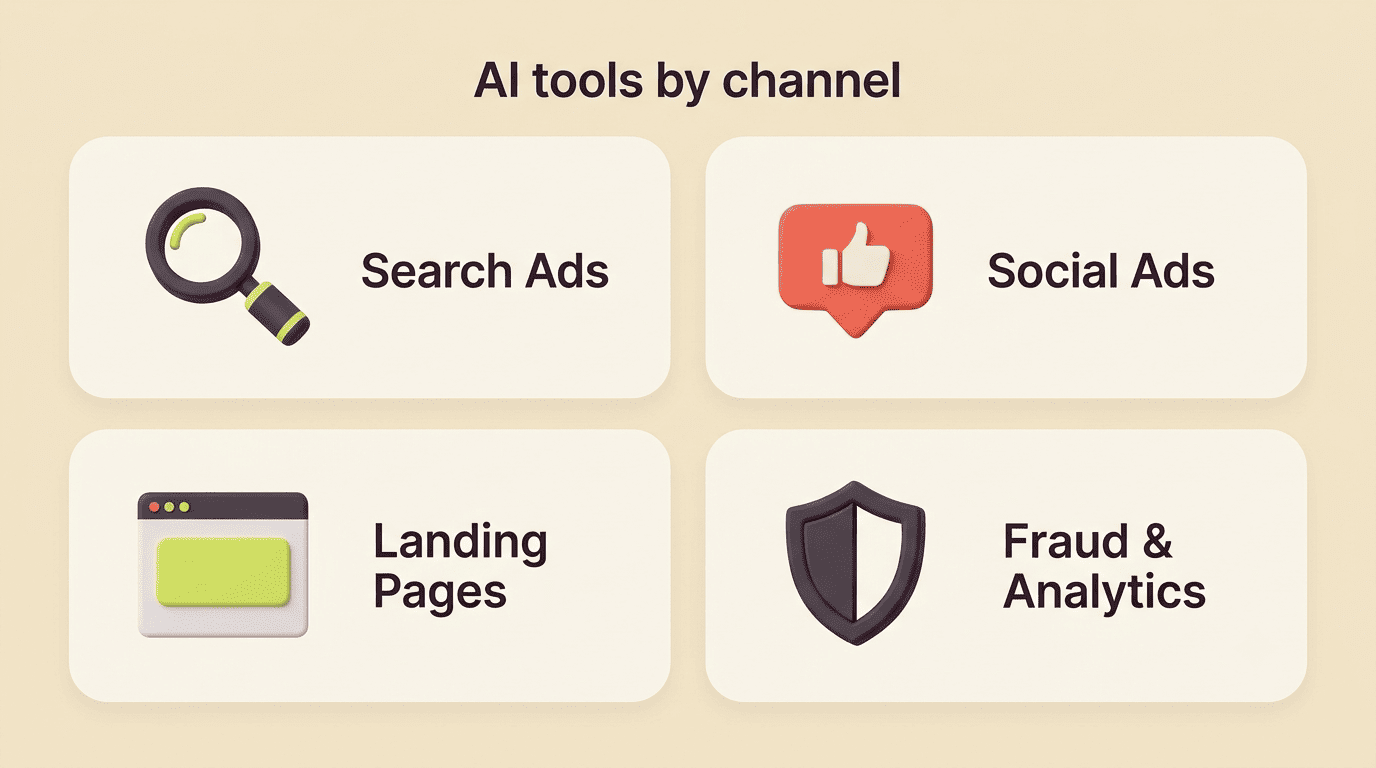
For Google Ads, marketers lean on Optmyzr and Opteo for bid and budget automation. For social — Meta and TikTok — Revealbot and AdCreative AI handle rule-based scaling and creative variation. Unbounce personalizes landing pages per keyword, Triple Whale rebuilds attribution after iOS privacy changes, and Lunio or TrafficGuard block click fraud in real time. For strategy, briefs, and analysis, general assistants like Claude and ChatGPT do the heavy thinking.
| Channel | Job | Representative AI tools |
|---|---|---|
| Google Ads | Bid/budget optimization | Optmyzr, Opteo |
| Meta / TikTok | Creative + scaling | Revealbot, AdCreative AI |
| Landing pages | Personalization/CRO | Unbounce |
| Analytics | Attribution | Triple Whale |
| Fraud | Click-fraud blocking | Lunio, TrafficGuard |
The practical rule: start with the platform where you spend the most, prove the lift there, then expand. Deploying AI across every channel at once is the fastest way to lose track of what actually worked.
Risks: Brand Safety, Fraud, and the Authenticity Trap
The same automation that saves money can quietly cost you trust. Consumer comfort with AI in advertising has fallen to 46%, down from 60% in 2023, and 39% of Gen Z actively dislikes AI-generated creative. Push too far toward the machine and the audience notices.
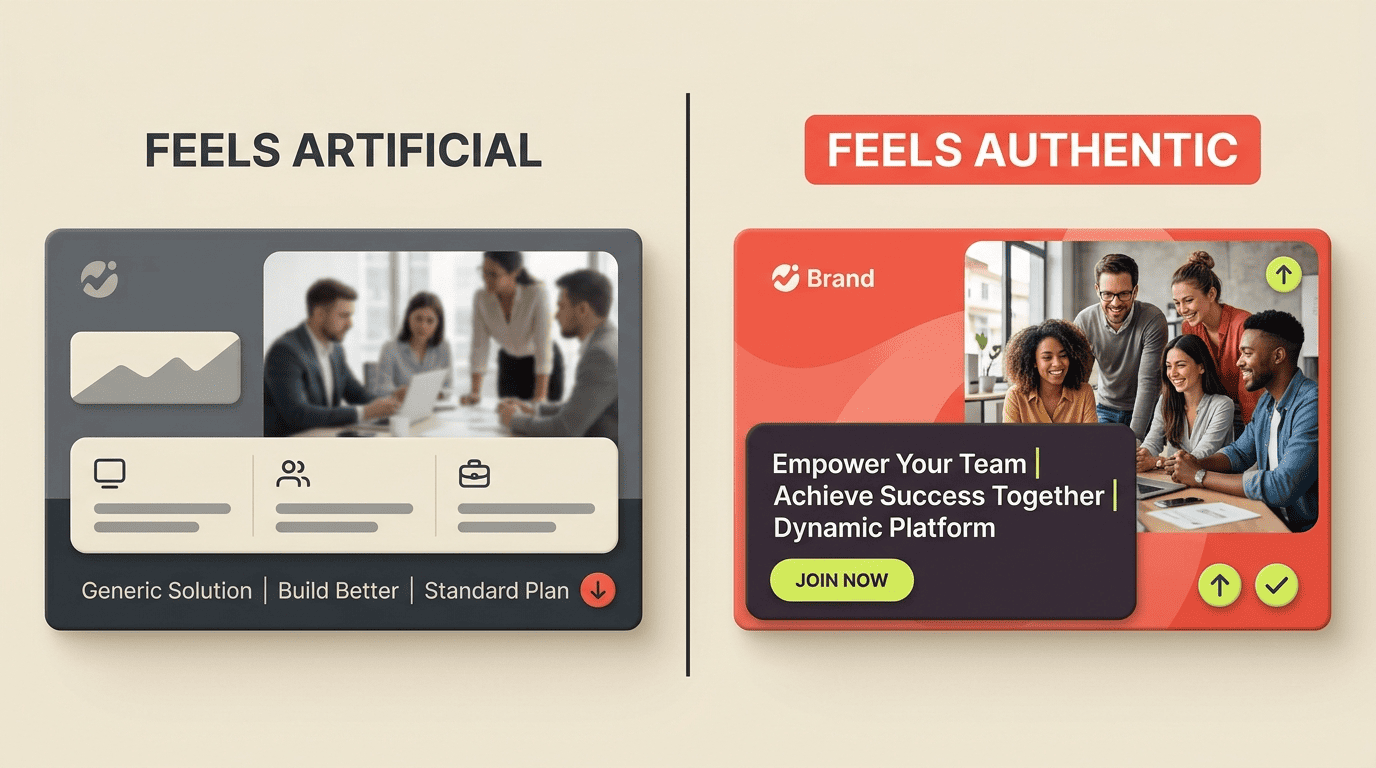
Governance has not kept pace with adoption. More than 70% of marketers have hit problems with AI — bias, hallucinated claims, brand-safety slips — yet fewer than 35% plan to invest in oversight. The disclosure gap is closing, with 58% of US marketers now labeling work «Created with AI,» partly because regulators expect honesty; the Federal Trade Commission has warned advertisers against overstating or misusing AI. The durable playbook is simple: automate the work, keep a human on the strategy, and disclose where it counts.